
New to jam? Start with how to make jam, step by step.
People use the word jam for almost anything fruity in a jar. That is fine at the breakfast table, but once you start making your own it helps to know what you are actually cooking. The differences are simple, and each one points you toward a slightly different method and a slightly different jar.
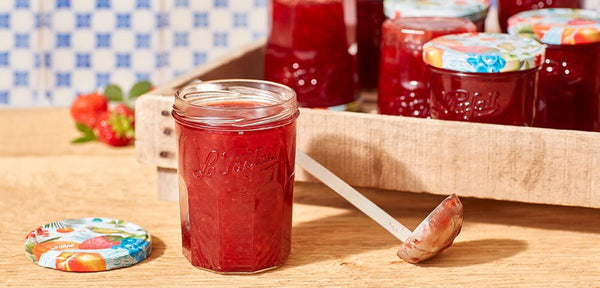
Jam
Crushed or chopped fruit cooked with sugar until it sets, keeping some of the fruit's texture. A good strawberry jam still has soft pieces of berry in it. It is the friendliest place to start, and it is what most of our recipes are, from Strawberry Jam to Blueberry Jam.
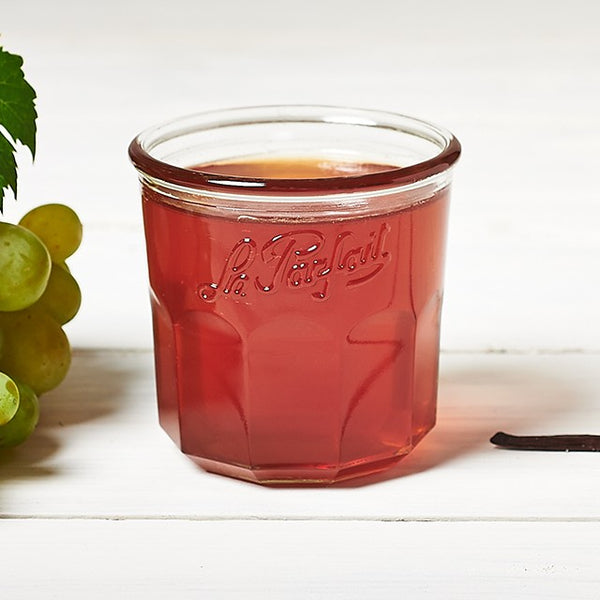
Jelly
Made from strained fruit juice, so it is clear and firm with no pieces at all. You cook the juice with sugar and pectin until it holds a wobble. That extra straining step is why beginners usually meet jelly second.
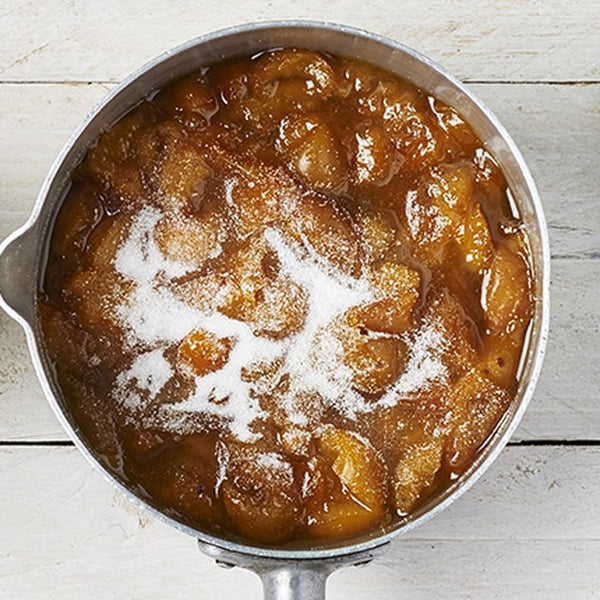
Preserves
The fruit is kept in the largest pieces of all, sometimes whole, suspended in a soft, syrupy set rather than a firm one. Think of a spoonful with an entire small apricot in it.
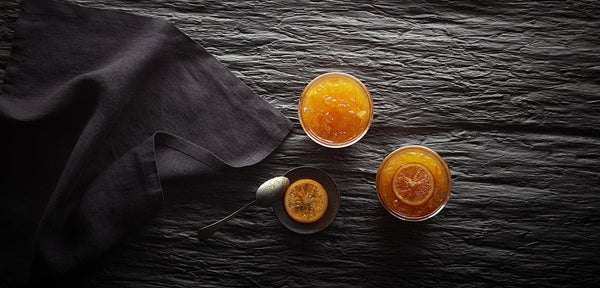
Marmalade
A preserve made from citrus, peel and all. The peel is what gives it that gentle bitter edge and its long, slow character. Our Orange Marmalade is the classic winter version.
Why the difference matters
All four are high-acid preserves, which is what makes them safe to put up with a simple hot fill and a good seal rather than any special equipment. What changes is the texture you are aiming for, the fruit you choose, and the jar that shows it off best. Chunky jams and whole-fruit preserves look their best in a faceted jar with a wide mouth; clear jellies suit a smaller, straight-sided jar. If you are not sure which size to reach for, our jar selection guide walks you through it.
Keep reading
Shop the essentials
Everything you need to fill a jar: